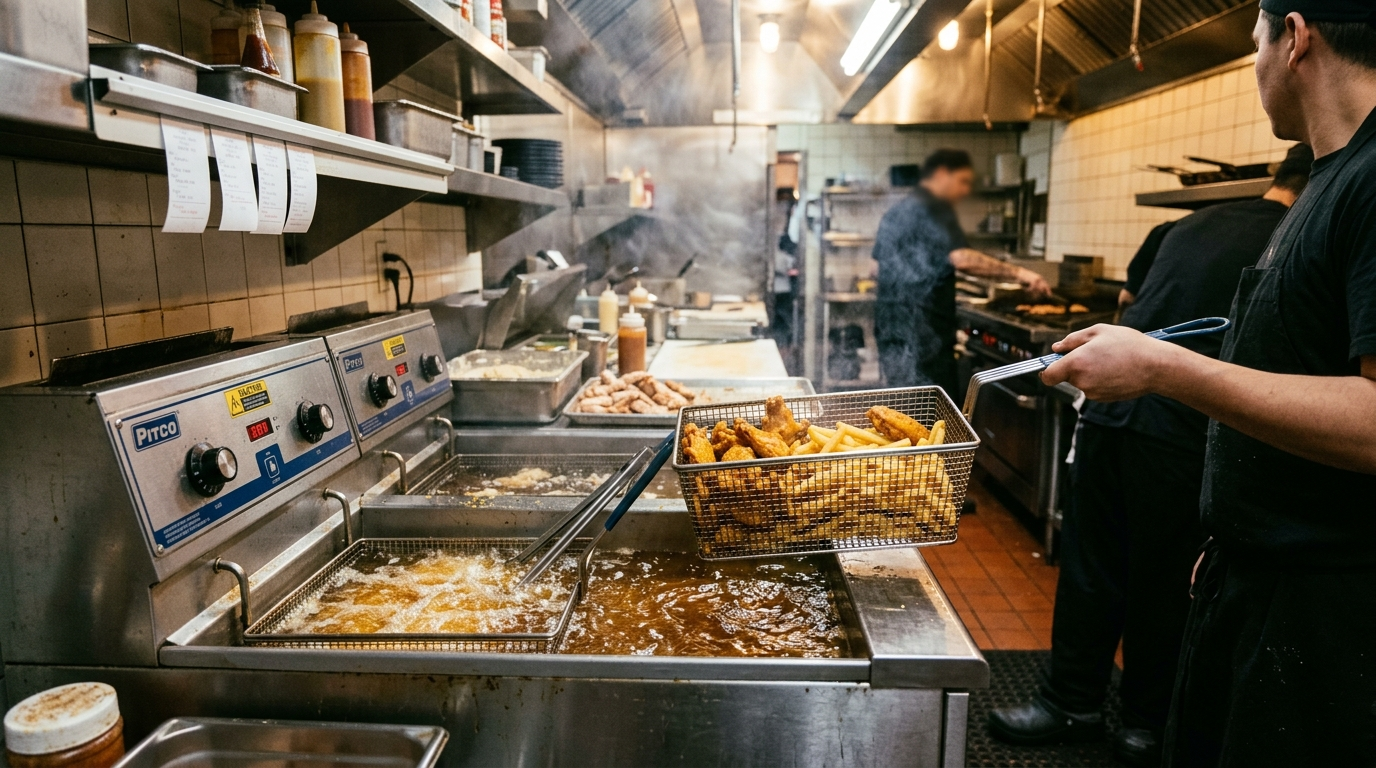
Restaurant grease recycling works by collecting used fryer oil through a scheduled collection service, filtering out food debris, and processing the oil into biodiesel, animal feed additives, or other industrial products. The restaurant stores the oil in a sealed container between pickups, and a licensed hauler handles the rest.

The Problem with Out of Sight, Out of Mind
A lot of restaurant owners treat grease the same way they treat the trash: bag it, toss it, forget it. That works fine for food scraps. It doesn’t work for oil. Grease is lighter than water and doesn’t break down the way organic waste does, so when it ends up in a landfill or a storm drain, it sits there.
That’s a problem for longer than most people realize.
Coastal towns like Leland and Carolina Beach deal with this more than most, because grease that gets into storm drains eventually reaches local waterways. Restaurant grease recycling exists specifically to keep that oil out of the environment and put it to use instead.
What a Grease Collection Service Actually Does
A grease collection service isn’t just a truck that empties a barrel. The better ones, at least the ones worth hiring, handle four things. They supply a locked, weatherproof container sized to your kitchen’s output. They run pickups on a schedule built around your volume. They log every collection for your compliance records. And they route the oil to a facility equipped to process it.
Restaurant oil recycling depends on that last step more than people assume. A hauler who just moves oil from point A to point B without a relationship with a processor isn’t really recycling anything. They’re storing a problem somewhere else.
Where the Oil Goes After Pickup
Once collected, oil goes through screening to remove batter bits, bone fragments, and other solids left over from frying. What’s left gets tested for moisture and acidity, then graded. High-grade oil, sometimes still called yellow grease, moves toward biodiesel refineries. Lower-grade or heavily used oil, known as brown grease, often goes toward rendering applications or industrial lubricants instead.
Honestly, I think most kitchen staff would care more about this process if they actually saw where the oil ends up. It’s not garbage. It’s inventory for somebody else’s supply chain.
Waste Cooking Oil Collection and Compliance
Health departments and municipal utilities pay attention to how commercial kitchens manage waste cooking oil collection, especially in areas with older sewer infrastructure. Documentation matters here. A restaurant that can show a pickup log going back two years has an easy answer if an inspector asks how they manage grease. One that can’t is taking on risk for no reason.
Keep the paperwork. It’s free insurance.
Choosing Between Providers
Not every collector operates the same way. Some charge a disposal fee. Others, particularly smaller family-run operations with their own local processing capability, pick up free and pay the restaurant for higher grades of oil. The difference usually comes down to whether the company owns its own processing relationship or has to pay a middleman. Ask directly. It’s a fair question, and a company proud of how it recycles will usually walk you through it happily.
Frequently Asked Questions
Q: What is restaurant grease recycling?
A: It’s the process of collecting used cooking oil from a commercial kitchen and converting it into reusable products like biodiesel, animal feed ingredients, or industrial lubricants, instead of sending it to a landfill or drain.
Q: Do restaurants get paid for grease recycling?
A: Many do. Collectors that resell oil to processors often pay restaurants based on the volume and quality of oil collected, especially for well-maintained, high-grade oil.
Q: How is grease collected from a restaurant kitchen?
A: A collector installs a sealed, locked container on-site and empties it on a set schedule, ranging from weekly to monthly depending on how much oil the kitchen produces.
Q: What happens to grease that isn’t recycled?
A: It typically ends up in a landfill or, when improperly disposed of, in storm drains and sewer systems, where it contributes to blockages and environmental contamination.
Q: Is grease recycling required by law?
A: Requirements vary by city and county, but many municipalities enforce fats, oils, and grease ordinances that require commercial kitchens to manage disposal properly, with fines for violations.
A Habit Worth Building Early
Restaurants that build a solid recycling routine early rarely think about it again, apart from confirming pickups on the calendar. The ones that put it off usually end up dealing with it during an emergency, which is a worse time to compare collectors and negotiating pricing. If your kitchen is still figuring this out, start with one call to a local service and get the container installed before your next busy weekend.
Leave a Reply